𝑴𝒐𝒔𝒕 𝒅𝒊𝒔𝒂𝒔𝒕𝒆𝒓 𝒓𝒆𝒔𝒆𝒂𝒓𝒄𝒉𝒆𝒓𝒔 𝒕𝒉𝒊𝒏𝒌 𝒕𝒉𝒂𝒕 𝑰𝑪𝑺 𝒊𝒔 𝒂 𝒑𝒐𝒐𝒓 𝒎𝒐𝒅𝒆𝒍 𝒇𝒐𝒓 𝒎𝒂𝒏𝒂𝒈𝒆𝒎𝒆𝒏𝒕 𝒂𝒕 𝒕𝒊𝒎𝒆𝒔 𝒐𝒇 𝒄𝒓𝒊𝒔𝒆𝒔. 𝑻𝒉𝒆𝒓𝒆 𝒔𝒊𝒎𝒑𝒍𝒚 𝒊𝒔 𝒏𝒐 𝒔𝒐𝒍𝒊𝒅 𝒓𝒆𝒔𝒆𝒂𝒓𝒄𝒉 𝒅𝒂𝒕𝒂 𝒔𝒖𝒑𝒑𝒐𝒓𝒕𝒊𝒏𝒈 𝒊𝒕𝒔 𝒆𝒇𝒇𝒆𝒄𝒕𝒊𝒗𝒆𝒏𝒆𝒔𝒔 𝒂𝒄𝒓𝒐𝒔𝒔 𝒂𝒍𝒍 𝒅𝒊𝒔𝒂𝒔𝒕𝒆𝒓 𝒕𝒚𝒑𝒆𝒔.
— E.L. Quarantelli, in O’Leary (ed.), The First 72 Hours, 2004
When I first found this line — buried in a short piece that Dr. Quarantelli, a forefather of disaster research, contributed to a compiled work — I jumped up and celebrated, feeling vindicated in my research quest to validate exactly that. But in a minute, I deflated in the frustration that this issue had been so thoroughly diagnosed back in 2004. A surreal concept when you think about how ubiquitous ICS is in the current emergency management landscape. Every job posting requires ICS courses. Every federal disaster pins the coordination mechanism between state and federal on an IAP. Command and control dominates our industry. We’ve laid the incident command system (ICS) as the keystone for the last 20 years. And we knew it didn’t work. For decades.
I started my research on this hypothesis about seven years ago from sheer frustration. I had just observed another major disaster in which the discussion in the EOC was so deeply misaligned from the reality on the ground. I saw and heard from survivors living in conditions that are unimaginable in a country this wealthy. And then experienced the dissonance as our group headed 45 minutes down the road to eat dinner at a national chain restaurant that looked no different from any other in the country on that Friday night. It was surreal. And frustrating.
I had spent months telling anyone who would listen about how overwhelming the 2017 hurricanes were and how untenable it would be to prepare for that level of storms consistently. I swore that those conditions wouldn’t happen if it was just a single storm without anything else going on. But now I saw that I was wrong. In my opinion on that event, there was no reasonable explanation why conditions got so bad for survivors. Yes, it was a very bad storm, but the resources were available, and if our system worked the way it should, it wouldn’t have happened. We should be able to prevent that with the level of funding, organization, and professionalism we currently have in emergency management.
But the EOCs I heard reports from were not talking about it. The media didn’t catch it. They put out stories marveling at the scale of the storm for months before eventually starting to show concern at the pace of recovery. The after-action reports months later were largely self-congratulatory, essentially saying ‘It was a very bad storm and we survived.’
From my experience, most people who join this work genuinely care about survivors and would have helped if they had seen it and been able to. So I turned to investigate the systems that allow this to happen — repeatedly. Which takes us back to my moment of triumph and dejection at finding the Quarantelli quote.
No matter how much the individuals involved may care about it, the reality is that the emergency management industry is not measured by survivor experience. Many discussions and actions in an EOC focus on “who’s in charge” and “who is going to pay for it,” which isn’t surprising for an industry where the principal laws and policies focus mostly on “who’s in charge” and “who is going to pay for it.” Even our current political discussion on emergency management seems focused on this abstract notion of shifting responsibility, both fiscal and otherwise, from one level of government to another.
That’s a red herring. The real issues trace back to decisions made after 9/11. We built an entire industry on a system that was never designed for this work — and the foundation is giving way.
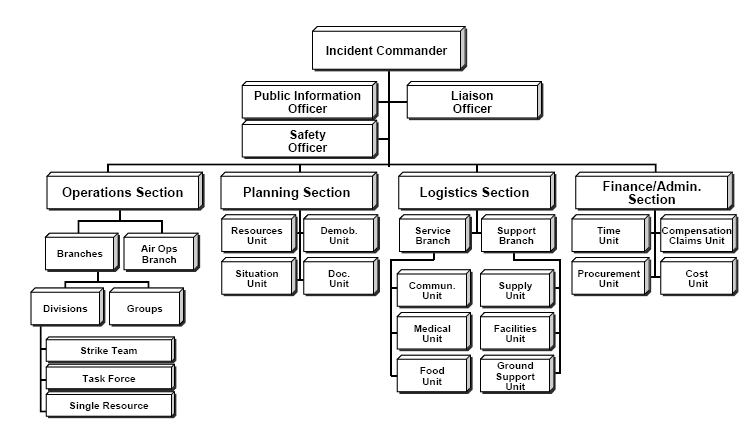
ICS was built for incident scenes. Fires, hazmat spills, search and rescue — environments with clear boundaries, short timelines, and unified command authority. It is genuinely excellent at that. But we took that system and made it the keystone of all disaster management. We laid a tactical tool across a strategic problem and then spent twenty years wondering why it doesn’t fit.
The result is a system that consumes an inordinate amount of resources — especially people — creates more competition than cooperation, allows blinders to cascading problems, and delivers no real economies of scale. Our current disaster operating model makes inaction feel very busy. As Quarantelli noted, there is little research demonstrating that it works for disasters. (I’ve looked.) In fact, a substantial body of research suggests the opposite — and, in many cases, predicted the very failures we continue to experience today.
We need to stop saying this is just a funding problem. The increases in disaster spending over the last 20 years are not only because disasters are getting bigger and more numerous. They are also because we are running an inefficient and ineffective model that was never meant to carry this weight. Climate change is real. But so is system design. And right now we are using one to excuse the other.
I wrote the book to offer a solution grounded in experience and research — so I wouldn’t feel like I was just admiring the problem. But the next arc of this blog is about the problem itself: how these foundational issues show up in ways we’ve normalized. I’ll use whatever tools my brain can come up with — real stories, hypotheticals, analogies, and visuals — to make visible what the evidence already shows: things aren’t working…even when we don’t write it down that way in our evaluations.
This is not about cosmetic reform. Not about shifting the name on the checkbook or reorganizing boxes on an org chart. We need to go back to the fundamentals of why we developed formal structures for managing disasters and ask honestly whether we are still working toward that goal or compounding it. Civil defense mentality and command-and-control models have never been shown to work for disasters in this country. Not once. After many attempts.
We need to really build a system for disaster management. We need to shift from command and control back to coordination — or as the researchers have termed it for decades, from the traditional/military model to the professional model. It’s time to professionalize disaster management in the United States.
Coordination, not command.
If that resonates with you — engage. Push back. Add your experience. This conversation is overdue, and it only becomes a real one if more than one voice is in it.