Coordination versus Command
We’ve talked about how our messaging discourages community donations and tells trained volunteers to wait for instructions. Another place I’ve seen our culture unintentionally slow response is in how we work with volunteer agencies. In trying to maintain order during disasters, we sometimes lose time and momentum. I’ll start with where some of it came from as we use emergency norms in disasters, but also when the need to maintain control and establish order can significantly slow things down.
Do Not Self-Deploy
For a while during my time at Red Cross, this was a growing tagline. We added it to trainings and conference calls because we were trying to rebuild relationships with government partners, especially fire departments. We needed them to call us when home fires occurred so we could help people.
Some industrious Red Cross volunteers had began to circumvent the problem by listening to police scanners to hear about fires and self-deploy – sometimes beating the firefighters to the scene and often parking in all the wrong places. It was a way to fix the struggle to get to people who needed help, but sometimes caused more problems than it solved.
So we messaged: Do Not Self-Deploy.
As usual, without nuance, this emergency messaging can be harmful when applied to a disaster situation.
For example, I remember a hurricane response where we had built up a large operation in anticipation of landfall. Teams staged. Emergency response vehicles loaded and ready. Volunteers on standby.
Then the hurricane shifted course. We didn’t get the direct hit, but we did get tornadoes from the outer bands.
Despite having all those teams and equipment available and unused, despite being in position and ready, the decision was made not to deploy our emergency response vehicles unless we got the call from emergency managers. Do Not Self-Deploy.
The disaster we had prepared for hadn’t materialized in the expected form. But people still needed help. And we had resources sitting idle, waiting for permission to respond to needs we could see and were best and uniquely positioned to support.
This is what happens when emergency protocols get applied to disaster contexts. In an emergency, waiting for coordination makes sense. In a disaster where systems are overwhelmed and needs are everywhere, it means resources sit unused while people wait for help.
Helping Where We Can
I also saw the opposite dynamic play out. An area was about to be hit by something like their fifth major storm in just a few months. While the impacts had been localized for most of them, the frequency had added up to the point that we escalated the response and brought in an Incident Management Team to support response and immediate recovery.
When a new storm was headed in, we ramped up volunteers to open shelters. The local government, with state support, decided not to open a shelter. It didn’t seem like it would be that bad, and they’d already spent most of their budget on overtime for the security and janitorial staff they provide to Red Cross shelters in schools. They said they’d come pick up our volunteers during the storm if it turned bad – an unsafe, but common, practice in the area.
We decided to open a shelter with a tribal partner since we had volunteers and they were willing to provide space. It seemed like a great opportunity to exercise the team and engage with a partner. When we told government partners about our plan, they were pissed and urged us not to do it.
But we’d already made the commitment and felt that it was the right thing to do so we opened the shelter as planned and listed it on the app. In the end, the storm passed and we had no overnight guests – just a couple people who stopped by to wait it out for a couple hours. We called it a success, but the local team never heard the end of it from their government partners.
I acknowledge that it’s not fair to share this without the full argument they were making against it, so let’s assume good intentions and that there was a real concern beyond just control that didn’t get communicated to me (or didn’t stick in my memory). But I share it because I think about it often and it changed my perspective on some of our current disaster organization norms.
Disaster NGO Mission
For background, let’s discuss the role of disaster non-governmental organizations.
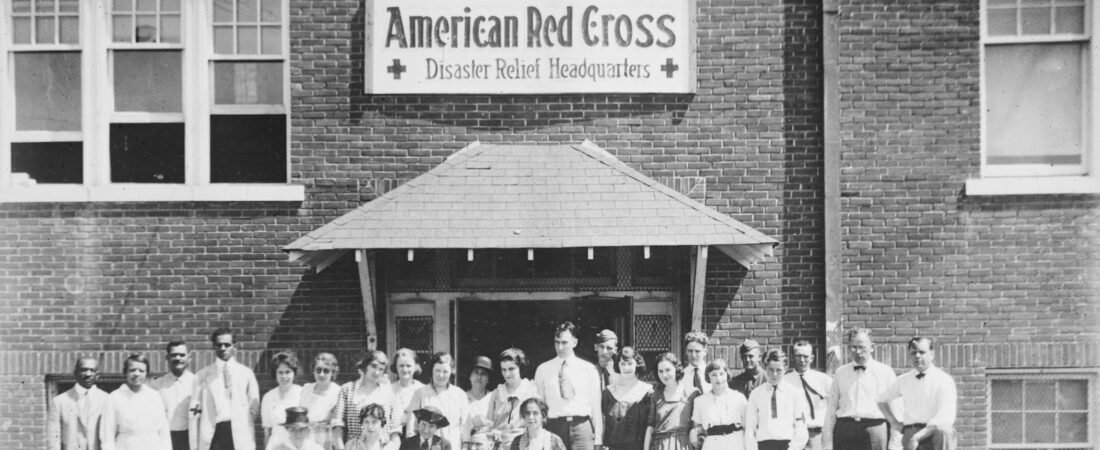
I’m most familiar with the American Red Cross and the Red Cross Movement, but numerous other NGOs – the Salvation Army, Save the Children, Catholic Charities, Islamic Relief, and other faith-based organizations – have long histories supporting disaster response. Government emergency managers are actually the newest members of the disaster response team in the US. Even during the civil defense era, the Federal Civil Defense Administration made a formal agreement with the American Red Cross to divide responsibilities between disaster relief and nuclear attack readiness.1
The Red Cross movement began in 1863 in Europe and came to the US in 1881. The American Red Cross was later chartered by Congress and they work on donations and don’t typically get funding from governments for disaster, though they can request it from Congress as they last did after Hurricane Gustav and Ike in 2008. The Congressional Charter grants the Red Cross authority to “carry on a system of national and international relief.”
Having worked on many Red Cross memorandums of understanding with government partners, I can tell you they consistently emphasize that the Red Cross is an independent, voluntary organization intent on fulfilling its mission as entrusted by Congress and the Fundamental Principles of the International Red Cross and Red Crescent Movement. Not to say that they won’t follow the law or don’t try as much as possible to coordinate with governments, Red Cross along with the other disaster NGOs are accountable to their mission obligations as well as their boards and donors.
At a basic level, government programs often exist to fill gaps the private sector cannot or should not address. Many NGOs, especially in disaster response, evolve to fill gaps left by both markets and governments. They are not designed to be competitors or subordinates.
ESF Leads
One practice we should look at critically, especially now that resources are constrained, is the idea of “leads” for mass care activities. The concept itself isn’t the problem – it’s the way I’ve often seen it interpreted or implemented in real life.
There’s an idea that government is choosing to work with one NGO over another for sheltering, feeding, and distribution of emergency supplies. Like hiring a contractor. It implies that you’re sending someone else away, that you’re not allowing one of these organizations to provide help for your constituents. Possibly worse is when government chooses not to work with any of them and contracts services out instead.
It’s very different if there isn’t any NGO capacity in your area and government needs to provide services by paying for them. But much of the NGO capacity has fallen off as government got into the mix. Even before FEMA, a former Red Cross official noted that federal aid, especially after Hurricane Agnes (1971), resulted in a decrease in individual and family assistance provided by Red Cross.2
We should be careful that our norms don’t unintentionally crowd out services that can be funded by donors wanting to help that exact mission rather than taxpayer funds, which have a lot of missions to cover.
A Pattern Worth Examining
Looking across these examples, I keep noticing something.
Emergency protocols designed for house fires being applied to disasters. Volunteer agencies waiting for permission to act on their independent mandates. The idea of “leads” that can sound like choosing contractors rather than coordinating partners.
When we start to look for ways to become faster and more efficient in disaster response, we need to examine some of these patterns. Some of our norms act like we have enough resources to be leaving some on the table – asking people and organizations to wait to help in order to maintain control or order.
In a disaster, when systems are overwhelmed by definition, can we afford that?
These aren’t individual decisions. They’re norms that have developed in our field. Ways we’ve structured disaster response. Messaging that has evolved over time.
What if the structure itself is creating inefficiencies we can’t afford? More on that next time.
References
Claire B. Rubin, ed., Emergency Management: The American Experience 1900-2010, 2nd ed. (Boca Raton: CRC Press, 2012)
- p. 87
- p. 100-101
Leave a Reply