
On Panic
Do people panic in disasters? It’s a question that sits at a long-standing fault line between disaster researchers, practitioners, and the public. The debate has been going on for more than a century, at least since Samuel Prince documented behavior after a Halifax explosion.
From what I have read, not only does there seem to be consensus among researchers that people as groups do not generally panic in disasters, but there is a consensus on the frustration among researchers that practitioners, reporters, and the public keep believing it. Researchers and writers, like Amanda Ripley and Rebecca Solnit, have documented extensively about how people actually behave in disasters, often pushing back on leadership narratives that assume panic and chaos.
I’ve read those books many times. And almost every time, I planned to write something that would share my own experiences and prove them wrong.
Because of course there’s panic, right? That’s a given. We talk about preventing it so often – in EOCs and planning meetings, building it into exercises to make sure it is realistic. Even in recent arguments about emergency management funding, I’ve heard the same narrative edging back in: without us, there will be chaos, panic, and communities won’t recover.
But as I sit down to write this, I have to admit something uncomfortable: when I reflect honestly on my experience, it aligns remarkably well with what the research shows.
So instead of trying to disprove it, I want to share a few observations—and then ask others who’ve lived or worked through disasters: have you ever really seen groups of people panic?
What Do We Mean by Panic?
First, let’s talk about what we’re talking about.
I think Amanda Ripley’s The Unthinkable is one of the most user-friendly summaries of disaster behavior research. (For a more academic take, Russell Dynes’ “Community Emergency Planning: False Assumptions and Inappropriate Analogies” is a classic and its use of quotation marks is a masterclass in academic snark.)
Ripley documents disasters and crises (plane crashes, building collapses, terrorist attacks) to identify how we individually react in crisis situations. People may freeze when they should run or fight when they should freeze, but people generally act humanely to help one another. As crowds, we tend toward actions that lead to survival without being antisocial.
The behaviors we often anticipate (running in the wrong direction, pushing people out of the way, rioting, attacking officials, looting, hoarding) are far rarer than we plan for.
When I Expected Panic
Even knowing this research, I often expected and planned for panic behavior.
One moment that stands out was a shelter closure announcement. I was part of the leadership group making the decision to close a shelter that had been open for months, even though some survivors were still struggling to find housing. We were very anxious about the reaction. I remember multiple conversations about how to word the announcement and whether additional security should be nearby in case something happened.
Now, I can’t remember exactly what we thought would happen, but naturally it didn’t. There were grumbles and a few angry shouts (about the level you’d expect after a bad referee call) and then people kept working to find solutions.
What stayed with me most was how silly and embarrassed I felt heading back to my desk at the disaster relief operation headquarters.
Elite Panic: When Leaders Panic About Panic
Sometimes it is the headquarters part that makes a difference when we talk about panic.
Researchers describe this as elite panic: leaders fear public chaos and alter their behavior to prevent it, even when that fear isn’t grounded in how people actually behave. (I think this aligns with what meta-leadership training at Harvard’s NPLI calls “the basement,” based on Freud’s work.) Much of the literature focuses on information control – delaying warnings, withholding details, shaping messages to avoid panic during evacuations, pandemics like COVID-19, and other scenarios.
What I’ve seen more often, and what isn’t discussed as much in the literature, is limiting or stopping aid delivery when things feel like that chaos might ensue.
I remember being at the Red Cross DOCC (our national operations center) when a job director called in to explain why he ordered his team to stop using newly deployed tablets to register people in a mega-shelter…because residents had started “mobbing” anyone holding one. I wasn’t there, so I can’t judge what that behavior looked or felt like on the ground. What I remember is the panic in his voice as he described it.
I’ve heard similar stories, frequently around financial assistance distribution: events shut down early, services paused because things were “getting out of hand.” I can’t fault anyone for the thought as I know the responsibility we feel as disaster leaders to make sure our work doesn’t add to chaos. In fact, I’ve frequently heard our role described as being the function to stop the chaos or prevent the panic.
But from here, outside of a disaster area, I find myself wondering: as a country that routinely creates these types of “mobs” for Black Friday sales, concert ticket sales, or new product launches, are we trying for a calmer calm in the chaos and need of disaster than a normal day in America?
People Often Act Better in Disasters
Glad you asked…as that’s what the research indicates we can expect. People often act better and more humanitarian in disasters than they do in normal life. This goes back to Samuel Prince’s foundational 1917 research and continues through disaster sociology since.
I’ve witnessed this phenomenon frequently as well, but the most vivid example I can give (because I had a before-and-after comparison) was in Puerto Rico after Hurricane Maria. I grew up in Miami and had visited San Juan several times, most recently in April of that same year. Before deploying, I’d spent weeks working between the NRCC and the Red Cross DOCC, hearing constant reports of desperation and need from a disaster like we hadn’t seen in a while in the U.S. When I arrived on the island about three weeks after landfall, I expected chaos.
I didn’t find it. Maybe others will tell you chaos existed in those first three weeks, but by the time I arrived, while it was still a disaster zone (one of the worst I’d ever seen) people had adapted. Disaster necessities had become routine.
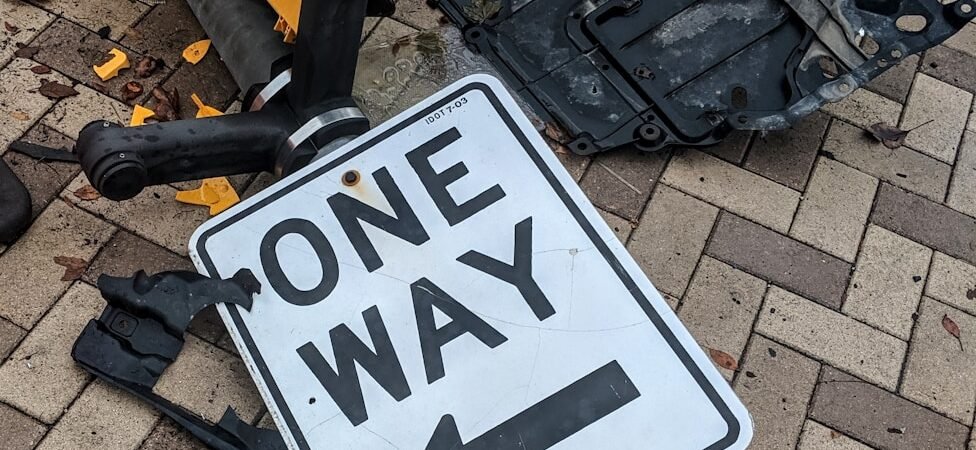
What struck me most was the traffic. Without power, there were no traffic lights. With many signs blown down, there was little to maintain traffic norms. But I swear it was some of the best, most courteous driving I’d ever seen. People waited patiently as each intersection became a four-way stop. We somehow collectively developed new traffic norms to adapt to the situation. In nearly three months on the island, I witnessed a single accident. People drove better in those first few weeks (it did eventually return to normal) than what I’d experienced in San Juan just months before—and significantly better than any of the US cities I’ve lived in.
So What Have You Seen?
I must acknowledge this is all from my memory, gathered through reflection over time. Memory is a notoriously fickle tool, and I could be shifting toward what the research tells me. That’s why it would be great to hear other stories.
If you’ve lived or worked through disasters, have you seen groups of people panic? Do we practitioners panic? (After all, we are people too.) If we don’t have those stories, why do you think we reference it so often in our planning and decision-making?
Note
Acronyms:
- EOC: Emergency Operations Center
- DOCC: Disaster Operations Coordination Center (Red Cross national coordination hub)
- NRCC: National Response Coordination Center (FEMA national coordination facility)
- NPLI: National Preparedness Leadership Initiative at Harvard
If you want to read more, check out work by:
- Samuel Prince (foundational disaster sociology, 1917 Halifax explosion study)
- Amanda Ripley (The Unthinkable: Who Survives When Disaster Strikes and Why)
- Rebecca Solnit (A Paradise Built in Hell: The Extraordinary Communities That Arise in Disaster)
- Russell Dynes (“Community Emergency Planning: False Assumptions and Inappropriate Analogies”)
- Kathleen Tierney (disaster myths and elite panic)
- Lee Clarke (panic and worst-case thinking)