Introducing the Disasters are Different Blog
By: Shannon McNamee | January 15, 2026
Sometimes the hardest part of a disaster is realizing you’re in one at all. That moment when you understand the rules have changed, that normal assumptions no longer apply, and that what worked yesterday won’t work today.
Like so many of us in the disaster field, I’ve been thinking a lot lately about disasters, how our work in the United States has been shifting, and whether the path that brought us here still makes sense for where we’re headed. In fact, I’ve started redirecting wholly unrelated conversations to talk about it. (Turns out you can get from “Where do you want to go for dinner?” to “Do people really panic after disasters?” in just a few conversational hops.) So I decided a better place for this discussion was a blog—somewhere to sit with these questions for a while and hear what others in the field are experiencing.
Disasters Are Different is a place to think out loud about disasters specifically (not emergencies, incidents, or catastrophes), but the kind of events that fundamentally disrupt how communities function for a time before stabilization and rebuilding. It’s also an opportunity to gather practitioners and disaster researchers into a combined space. When I went back to my grad school books on disasters after over a decade in the field, it felt like they were describing a different reality from what we talk about in practitioner spaces. What the research shows doesn’t always match what we discuss in practice. And what researchers get to see about disasters at times seems limited and carefully curated—often the obstacles that really tripped us up are never talked about again once we’ve moved past them.
This blog is a space to talk through those differences: between what research has documented, what we see and discuss in the field, what the policies say, and what assumptions they’re based on.
What is a Disaster?
There are, of course, many ways to define what a disaster is. Entire careers have been built around that question. Disaster research trailblazers like Perry and Quarantelli pulled together multiple anthologies focused specifically on “What is a disaster?” so I don’t think we need to spend a lot of time re-litigating definitions here.
My very simple takeaway from all of that work is this:
Disasters are about social disruption.
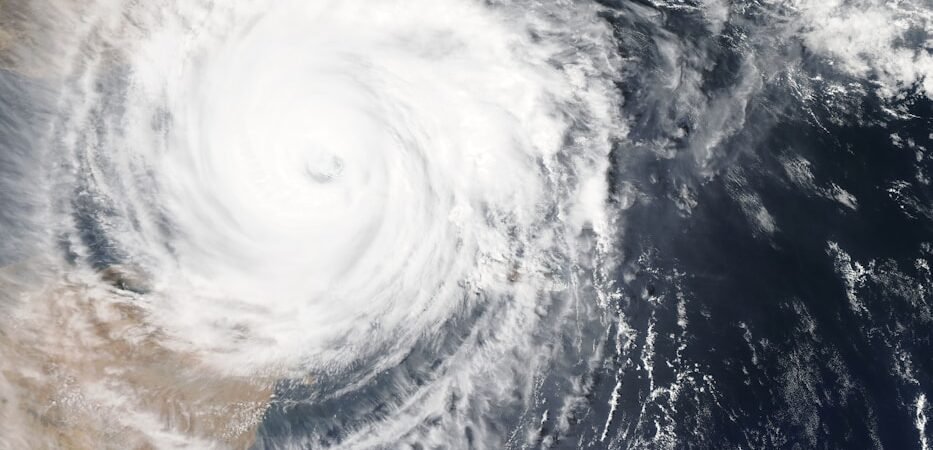
A Category 5 hurricane spinning in the middle of the ocean is just a very impressive weather event for the fishes. A 100+ mph EF-Unknown tornado cutting through an empty field may be catastrophic for the landowner, but it isn’t a disaster in the broader sense. A house fire is devastating for the family involved, but it doesn’t upend the functioning of an entire community.
A disaster happens when we have to fundamentally shift how society operates. Suddenly hundreds of people are living in school gyms and church halls. Children aren’t going to school. We ease rules about what trucks can be on the road and how long drivers can drive. We suspend environmental and safety regulations. Overall, we redefine what counts as safe. These are rational responses to disaster conditions, but they represent fundamental shifts in social norms. It’s not really about scale or even about what caused the crisis—it’s about how the rules themselves change.
In emergencies, people adjust—they detour around closed roads, boil water, wait out power outages. The system bends but doesn’t break. In disasters, the parameters themselves shift. We change what society considers normal because the situation demands it.
Recognizing the point when the shift occurs is one of the most critical actions we take in disasters. Sometimes we know it early. I remember exactly where I was when I understood that Hurricane Harvey would be a disaster. I was on a temporary assignment preparing for the surge of people flocking to see the solar eclipse, listening to the national morning briefing, when they reported that fragments of a mostly dissipated storm were roaring back to life. That stomach-drop feeling as you mentally run through all the implications of what that storm would bring made me realize that I would be called back to support the response, though I had no idea then how often that feeling would repeat over the rest of 2017.
While Harvey gave us notice, most of the time we have to figure it out in the middle. Those moments creep up on us and we don’t recognize the threshold until we’re far into the disaster. While we spend time and resources to prove it is a disaster for federal funding, we know that if we wait and rely only on damage assessments and infrastructure reports, we can miss that invisible tipping point. If we do miss the point when social norms have already shifted, when ethics have changed, when the general sense of what people should be and will be doing has fundamentally altered, it can lead to a real mismatch between the reality in the community and the reality in an EOC. These are some of the topics that this blog will cover as we talk honestly about what really happens in disasters.
So Why Now?
Many of us are having big thoughts about the future of this field. I’ve been wrestling with these questions for years, but it was during this recent “fork in the road” period that I finally sat down and started researching and writing.
These conversations are critical now. When resources are abundant, systems can get by with inefficiencies and workarounds. When resources are scarce, structural flaws in systems, policies and procedures are exposed. If we’re going to make a compelling case for why disaster management matters, we need to be clear about what we’re actually trying to accomplish and whether our current approach is the most effective way to do it.
There’s also a silver lining here, however small. Without federal grant funding, we don’t have federal grant requirements. No carrot means no stick. This opens space for innovation and improvement as we are forced to modify our systems anyway.
This moment, uncomfortable as it is, gives us a chance to look honestly at the foundations of what we’ve built: to distinguish between what is strong, durable structure and what was always a temporary fix that we never quite went back to address.
That’s what this blog will explore.
In the next post, I’ll share my thoughts and questions on “Do people really panic in disasters?” with an audience better suited for the conversation than the dinner table.